

Lack of multilingualism in product data – and how PIM contributes to internationalisation
In a globally connected world, customers expect information in their native language – quickly, accurately and consistently. However, companies often lack multilingualism, especially when it comes to product data. The result: bumpy customer experiences, missed conversion opportunities and considerable extra work for marketing and sales teams.
Multilingual product data: the key to true internationalisation
Tapping into international markets means more than just expanding shipping zones. It means communicating locally. Product descriptions, technical data, packaging texts and promotional materials must be linguistically and culturally accurate – and consistent across all channels. Without this foundation, brands quickly lose credibility and customer proximity.
This is exactly where a powerful Product Information Management (PIM) system comes into play.
How our PIM system with integrated AI enables true multilingualism
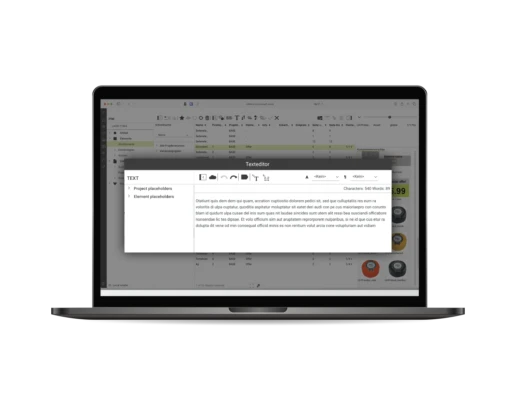
Our PIM solution goes beyond traditional data management: it actively supports internationalisation by automating language diversity. The core feature? An integrated AI-powered translation function that automatically translates product descriptions, attributes and other relevant information into the desired target language – directly in the system, consistently and controllably.
The advantages at a glance:
-
- Automatic translation at the touch of a button Integrated AI translation eliminates the manual effort of translating thousands of product texts.
- Central control of all language versions All language variants of a product are centrally maintained and versioned in the PIM system – ideal for international marketing campaigns or country-specific weekly offers.
- Efficiency in the production of marketing materials Whether print flyers, online banners or POS materials: with up-to-date, linguistically correct product data from the PIM, advertising materials can be created faster and more reliably – in all required language versions.
- Reduced time-to-market Faster translation and approval processes mean that new products or promotions can be launched simultaneously worldwide – without delay.
- Better customer experience Customers buy where they feel understood. Product data in the local language promotes trust and has been proven to increase conversion rates.

Marketing campaigns in five languages – no longer a problem
A typical example: weekly special offers in retail. Without a PIM system, each new week means recurring manual effort: selecting products, adapting descriptions, having them translated, producing graphics and materials. In multiple languages? A huge task.
With our PIM system, this process is automated: select the product category, activate versioning, carry out translations – done. Local marketing teams can access the correct language versions directly.
Conclusion: Internationalisation begins with data
Linguistically consistent, automatically maintained product data is the cornerstone of successful expansion and better customer experiences – both online and offline. Companies that invest in an intelligent, AI-supported PIM system today not only secure a competitive advantage, but also make the leap from ‘internationally present’ to ‘locally relevant’.
Is multilingualism still missing from your product data?
Then now is the right time to lay the foundation for your international brand presence – with our PIM solution.
Related Posts


AI in marketing: How collaboration tools are reinventing the retail sector
Retail is changing – not because of products, but because of teamwork. Find out how collaboration tools, AI and change management are breaking down silos and strengthening omnichannel strategies.

Detect data errors with AI before the campaign launch
The more complex campaigns become, the more critical the quality of the underlying data becomes. Even small errors in target groups, product data or personalization logics can lead to significant sales losses, damage to the image or unnecessary marketing costs